
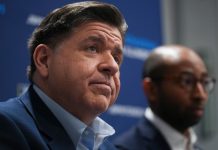





CHICAGO — The city’s 50 alders on Thursday sent Mayor Brandon Johnson a strong message, unanimously rejecting a $300 million property tax hike he unveiled in his $17.3 billion city budget proposal last month.
The vote during a special meeting of the City Council was taken without any debate and came two days after Johnson publicly backed away from the plan amid strong initial pushback, calling it just the start of a collaborative endeavor.
“This is a healthy process. This is something that my administration can handle. I’m not intimidated by voices from individuals who are city leaders in their own respect,” Johnson said at a press event after the vote. “This is a good thing for Chicago. It’s a new process. People will learn to adjust to it as we continue to move forward.”
Johnson had said the hike in the tax levy was necessary to avoid laying off city workers like police officers and firefighters as Chicago faces a nearly $1 billion budget gap.
The proposal received significant resistance from City Council members who feel there are other ways to generate revenue for the city aside from a property tax increase. Johnson needs 26 City Council votes to get a majority to pass his budget, but just last week, 29 alders — more than half the 50-member Council — signed a letter calling for the special meeting.
Prior to heading to City Hall for Thursday’s special meeting, Johnson was in West Garfield Park on the city’s West Side to break ground and celebrate the expansion of the Malcolm X College West Campus, one of Chicago’s seven city colleges.
Johnson was asked by WGN about the resistance to his budget proposal. He answered by sharing the reasons for why he brought forth the proposal in the first place, among those to fund his administration’s initiatives and to prevent the city from having to do any layoffs.
“What’s in this budget is increasing opportunities for youth employment and workforce development,” the mayor said Thursday. “What’s in this budget are investments for mental health and behavioral health care services. What’s also in this budget are critical investments for community safety. What’s also in this budget are critical investments for housing, as well as building more affordable homes.”
With the tax hike killed, Johnson will have to begin the process of figuring out other ways to fund his budget. The mayor has said without the property tax hike, layoffs and furloughs would be unavoidable, but he says he’s willing to come to the table to make something work.
“As a public school teacher, sometimes we do things to get people’s attention,” Johnson said previously. “And so now that we have the attention of everyone, I’ve said from the very beginning, this is a proposal.”
Johnson says other options to generate revenue for the city include raising the garbage collecting fee and the amusement tax, and increasing taxes on cigarettes, parking and liquor. Also on the table is using federal COVID-19 relief funds.
The City Council has until the end of the year to approve a budget for 2025.