






CHICAGO (AP/WGN) — Seated in a packed courtroom Tuesday and wearing a green Border Patrol street uniform, Border Patrol chief Greg Bovino was at Dirksen Federal Building taking questions about the immigration enforcement operation in the Chicago area, which has produced more than 1,800 arrests and complaints of excessive force.
Tuesday’s hearing comes after U.S. District Judge Sara Ellis earlier this month ordered uniformed immigration agents to wear body cameras, the latest step in a lawsuit by news outlets and protesters who say federal agents have used excessive force, including the use of tear gas, during protests against immigration operations in the Chicago area, called Operation Midway Blitz by the Trump administration.
Bovino, chief of the Border Patrol sector in El Centro, California — one of nine sectors on the Mexican border — has become the face of the Trump administration’s immigration crackdowns in Los Angeles and Chicago.
He’s accused of himself throwing tear gas canisters at protesters during Operation Midway Blitz.
Protestors outside hearing
Tuesday’s hearing got underway around 10 a.m. and was preceded by a protest outside the courthouse. Bovino came into court with an armed escort, well within earshot of protestors.
“What is happening right now with ICE is completely outside of the law,” Corinne Rose, of the protestors, said. “It’s brutal, it’s unjust and it’s unconstitutional. And I think we all need to stand up and be heard.”
Early in Tuesday’s hearing, Ellis referenced tear gassing over the weekend in Old Irving Park.
“Kids dressed in Halloween costumes walking to a parade do not pose an immediate threat to law enforcement officers … and you can’t use riot control weapons against them,” the judge told Bovino.
Ellis had initially said agents must wear badges, and she banned them from using certain riot control techniques against peaceful protesters and journalists. She later said she was concerned agents were not following her order after seeing footage of street confrontations involving tear gas during Operation Midway Blitz, and she modified the order to also require body cameras.
“They must tell people what they are going to do before they do it, so people have the opportunity to comply,” Ellis told Bovino on Tuesday. “That’s what I meant, and that’s not what I’ve seen in any of these videos.”
Incidents around Chicago area
Ellis last week extended questioning of Bovino from two to five hours because she wants to hear about agents’ recent use of force in the city’s Mexican enclave of Little Village. During an enforcement operation last week in Little Village and the adjacent suburb of Cicero, at least eight people, including four U.S. citizens, were detained before protesters gathered at the scene, local officials said.
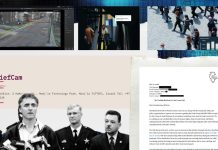
The attorneys representing a coalition of news outlets and protesters claim Bovino himself violated the order in Little Village and filed a still image of video footage where he was allegedly “throwing tear gas into a crowd without justification.”
Over the weekend, masked federal agents and unmarked SUVs were spotted on the city’s wealthier, predominantly white North Side neighborhoods of Lakeview and Lincoln Park, where footage showed chemical agents deployed on a residential street. Federal agents have been seen and videotaped deploying tear gas in residential streets a number of times over the past few weeks.
Bovino also led the immigration operation is Los Angeles in recent months, leading to thousands of arrests. Agents smashed car windows, blew open a door to a house and patrolled MacArthur Park on horseback. In Chicago, similar Border Patrol operations have led to viral footage of tense confrontations with protesters.
Judge addresses body cameras
At a previous hearing, Ellis questioned Kyle Harvick, deputy incident commander with U.S. Customs and Border Protection, and Shawn Byers, deputy field office director for U.S. Immigration and Customs Enforcement (ICE), about their agencies’ use of force policies and the distribution of body cameras.
Harvick said there are about 200 Border Patrol employees in the Chicago area, and those who are part of Operation Midway Blitz have cameras. But Byers said more money from Congress would be needed to expand camera use beyond two of that agency’s field offices.
On Tuesday, Ellis asked Bovino directly if he has a body-worn camera.
“I have not yet received a body-worn camera, nor the training,” Bovino answered.
The judge then told Bovino to get one by Friday.
“The camera is your friend,” Ellis said. “If someone is throwing a rock at your head, the camera will catch it.”
The judge ordered Border Patrol to turn over use-of-force reports and video from Sept. 2 through Saturday, Oct. 25, by the end of the week, and all future videos and reports within 24 hours of being finalized.
Judge demands daily in-person updates from Bovino
Ellis then ordered Bovino to show up in person every weekday at 6 p.m. to tell her about the day’s activities. She’s also requiring by Friday lists of all people arrested for non-immigration-related offenses, along with reports and video supporting the arrests.
Bovino encountered a crowd shouting obscenities as he left the courthouse and he appeared defiant, unwilling to dial back.
Some of the agents guarding Bovino did not seem to be wearing cameras or have their names or badge numbers visible as the judge required.
“What is happening, Bovino is as a barbaric individual, and I just hope this judge provides some level of accountability because that’s not what’s happening right now,” Chicago Mayor Brandon Johnson said.
Plaintiffs asked Ellis to enter an order banning immigration agents from deploying tear gas. She said he’s not willing to go that far, at least not yet.