








The war on Iran, along with intense military, political and economic results, is continuously taking on new dimensions. As with any war, its consequences are not limited to diplomatic channels, military calculations or gas prices. On the contrary, these tensions resonate across societies worldwide, reshaping public discourse and intensifying Islamophobia on a global scale. Once again, civilians living in every corner of the world are bearing the heaviest burden of this situation. What emerges in societies during such times is not merely a reaction to the conflict, but extends to a broader identity war in which Muslims, regardless of their nationality, are portrayed as a threatening element that fosters fear.
This dynamic is described as the “globalization of security narratives.” When states frame conflicts as clashes of civilizations or ideological and religious differences, these narratives quickly cross borders and resonate across all segments of society through the media, political rhetoric, and digital platforms. The current situation reveals that the lessons of post-9/11 suffering remain unlearned and pressures on Muslims have intensified once again alongside the Iran war. Ultimately, a transnational environment emerges where Muslim identity is intertwined with suspicion, threat, and othering, and these discourses are increasingly shaping reality.
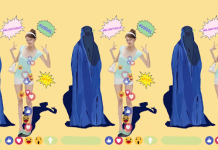
We can easily measure this pulse through social media by checking the evolving news technology, with our increasing screen timing everyday. The latest findings from the Center for the Study of Organized Hate reveal that the outbreak of war has significantly increased online hate crimes. In online platforms like Facebook, Tiktok, X (formerly Twitter) Instagram and all similar tools, thousands of posts portray Muslims as a mass threat, reinforcing and intensifying long-standing stereotypes. Since the beginning of 2026, Islamophobic content has surged at an alarming rate, building upon the hostile environment that has persisted since 9/11. What is particularly striking is not just the volume of this content, but also its speed of spread; this speed transforms moments of crisis into opportunities for digital hate to flourish.
The inclination to see Islam as a single, monolithic identity, however, is a larger issue. The representation of Muslims in a variety of political ideologies, languages, and cultures is often erased during times of conflict and replaced with a singular, dubious, and terrifying picture.
For many Muslims, the impact of this situation is directly affecting their daily lives. It can arise in daily interactions, such as changes in how someone is treated at work, a comment made in a classroom, or the feeling of being closely scrutinized due to hate crimes in public spaces and escalates into harassment or violence. However, even in its milder forms, it creates constant pressure by forcing individuals to feel the need to explain themselves and distance their identity from events entirely beyond their control.
If history has taught us anything, it is that this cycle is predictable, not inevitable. Unless collective conscious efforts are made to challenge these narratives, global conflicts will continue to evolve into global prejudices and Muslim communities everywhere will be forced to bear the consequences of wars they did not create.