





“Mamdani is my mayor,” I would hear come out of the mouths of individuals who weren’t even from or living in New York City. In November 2025, the election of Mayor Mamdani was unforgettable. Muslims around the world perceived the election as breaking free from a cage that was placed on them unlawfully.
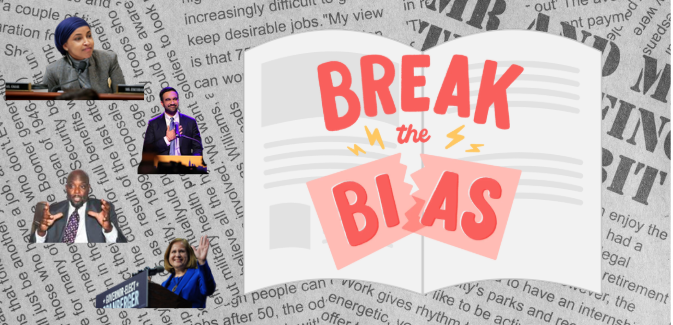
Muslim political leaders in the United States have been active since 1991 with the first elected official being Charles Bilal, mayor of Kountze, Texas. Since then, Muslims have only gained political roles within the United States from Rep. Ilhan Omar, to Lieutenant Governor Ghazala Hashimi, to mayor Abdullah Hammoud. With the rise of Muslim leaders in the States, offenders began to discriminate against Muslims, increasing rates of Islamophobia that violate fundamental human rights, fueling threats to Muslims all over the country.
To understand the reason behind the detrimental ideology of Islamaphobia, we have to understand the roots. The origins of Islamophobia trace back long before 9/11, sparking during the colonial era. The term was first used by two French researchers and later was utilized in the Bosnian Genocide, in which Bosnians were targeted during the Ygoslavaek Wars. Nationalist during the time used anti-Muslim rehtoric as a weapon to justify ethnic cleanising and a broader appeal to anti-Muslim sentiments.
The attacks of 9/11 led to the rise of Islamophobia and the beginnings of the War of Terror which caused an uprise in anti-Muslim rhetoric. Policies that were leveraged by the government such as the USA Patriot Act, allowed the federal government to respond to terrorist attacks and deter them. These federal policies allowed not only Muslim individuals to be targeted but Arabs, and those who were perceived to be Muslim. Programs by the FBI (Federal Bureau of Investigation) monitored daily lives of Muslims and kept watchlists for ordinary activities such as traveling and opening a bank account, leaving Muslims with the fear of stepping even a foot out of their homes to perform daily necessities.
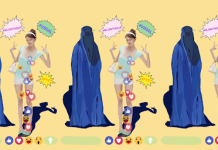
Long after the tragedy of 9/11, the public continued to intensify anti-Muslim bigotry. This was done via the influence of the media and fear-driven emotional politics. Hate crimes surged with visible targets being women who wore the hijab and Sikh men who were misidentified as Muslims due to turbans and faced verbal and physical assault.
Although it has been 25 years since the horrific events have occurred, there still seems to be a long way to go in the dismantlement of anti-Muslim bigotry especially for our Muslim political leaders. One of the first notable injustices that occurred against a Muslim political leader was against Rep. Keith Ellison, the first Muslim to be elected into the U.S. In Congress in 2006. Ellison faced persistent pushback and had his beliefs questioned tremendously while in office.
Other acts of prejudice were encountered by Rep. Andre Carson, elected in 2008, who combated institutional discrimination while Rep. Ilhan Omar, elected in 2018, faced numerous death threats, voicemails in her office calling her a “terrorist Muslim,” and threats to forcibly remove her hijab. Not only is this dehumanizing but is also an act of taking away one’s freedom of expression under the First Amendment of the Constitution. Rep. Omar has faced physical assault, sprayed with an unknown substance in a public attack at a Minneapolis town hall meeting. Though the Department of Justice filed federal charges against the aggressor, it is still a subtle reminder that Islamophobia still exists, despite this incident being in January of 2026.
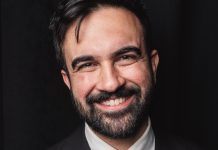
Similarly, Mayor Zohran Mamdani of New York City has also faced anti-Muslim.. When running his campaign for Mayor, strategists attempted to create AI-generated ads that played a big role in xenophobic stereotypes. Far-right speakers have posted political cartoons depicting his campaign as an “Islamic invasion.” Political leader in Skokie, Illinois Bushra Amiwala faced similar comments from the public while running for the Illinois 9th Congressional District Democratic Candidate earlier this year.
Furthermore, military actions and attitudes launder Anti-Muslim sentiment by associating Islam with existential threats official rehtoric and military operations such as The War of Terror, mainstream prejudice, turning systemic bias into acceptable foreign policy. Military training has historically promoted the idea that Islam is inherently violent. Leaked documents revealed that counter terrorism agents were taught training modules that compared American Muslims with terrorist sympathizers. This cycle fuels an “ideological loop” where political leaders authorize military actions, then justify them with anti-Muslim stereotypes resulting in major islamaphobia.
To combat these injustices, individuals can educate themselves about Islam and Muslim communities surrounding them to get a personal account on if what the media reports aligns with what they witness. Engaging respectfully with people from different backgrounds can help build a mutual understanding and help reduce prejudice. Moreover, media literacy is crucial, as misinformation fuels anti-Muslim attitudes.
This fight starts with the ordinary people that can support and create welcoming environments in schools, workplaces, and community organizations by promoting understanding and addressing bias when it occurs. Ultimately, through education, meaningful dialogue, community engagement, and a commitment to fairness and respect, people can help build a society where Muslim political leaders and all Muslims are able to participate fully in public life without fear of prejudice or discrimination.